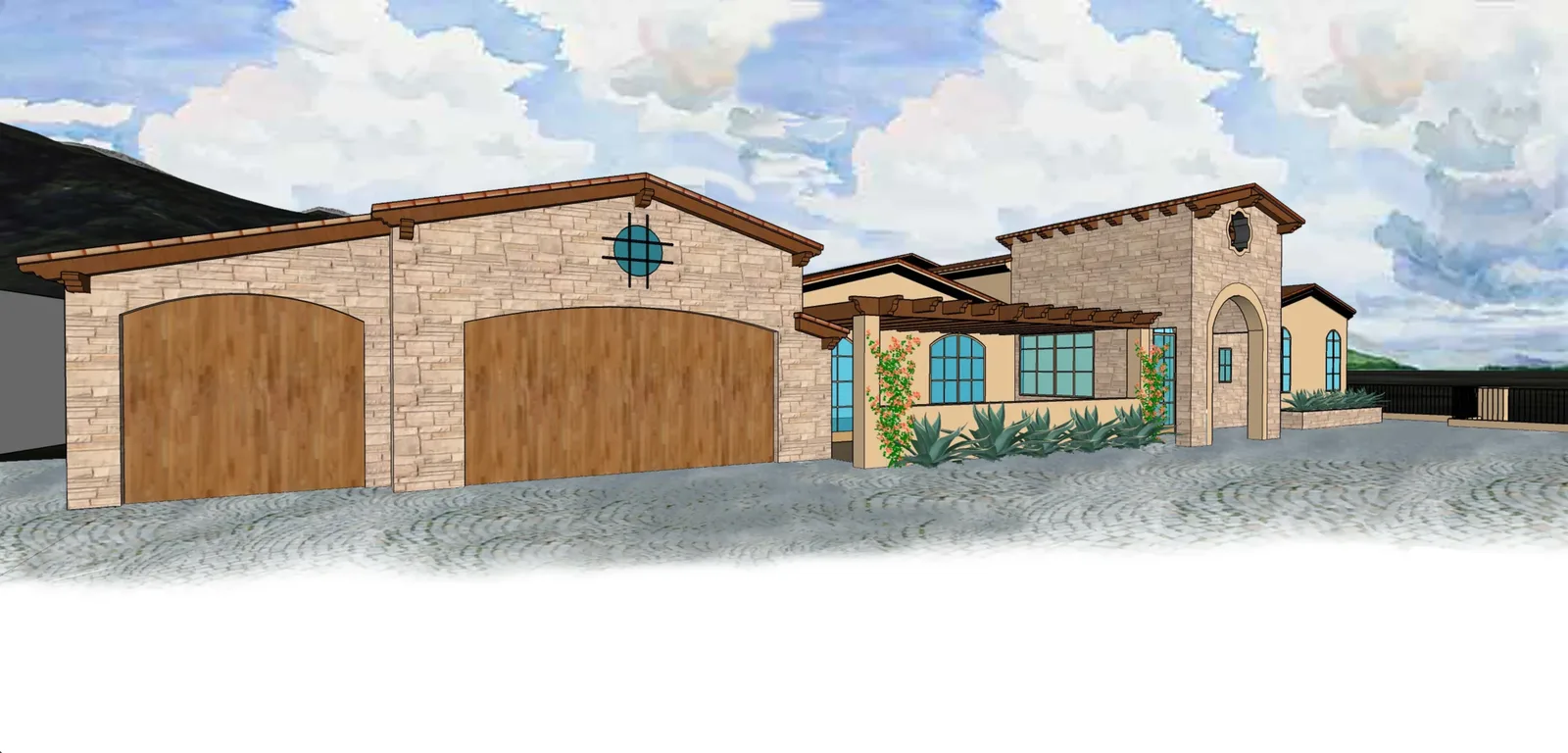
Calabasas is one of the West Valley cities where design is reviewed as a matter of course. Many residential and commercial projects go before the Architectural Review Panel before a building permit is issued. Having served on the panel since 2020, I can say what it is for: it is not a hurdle to be cleared but a conversation about whether a building fits its street, its hillside and its neighbours.
What the panel considers
- Massing and scale. How large the building reads from the street and from adjacent properties, and whether it steps with the terrain.
- Hillside conditions. Grading, retaining walls, and how the design responds to slope rather than flattening it.
- Materials and colours. Whether the palette suits the setting and the city’s guidelines.
- Roof forms, openings and articulation. The details that make a large house read as composed rather than boxy.
- Landscape and screening. How the building meets the ground and the street.
How to prepare a submission
The projects that move through review smoothly share a few habits. The design responds to the site from the first sketch rather than being adjusted afterwards. The drawings show the building in context: elevations with the neighbours and the slope, not in isolation. Materials are called out and sampled. And the applicant, or their architect, can explain the reasoning behind each decision, because the panel is asking why as much as what.
Where it sits in the process
Design review comes before the building permit. It is part of the approvals stage in our six-stage process, and because it can change the design, it is far better to anticipate it during feasibility than to discover it at submittal. For hillside lots in particular, the review and the grading approach are inseparable.
Working with an architect who sits on the panel
I recuse myself from reviewing my own clients’ projects, as any panel member would. What the experience gives our clients is a clear sense of what the city is looking for and how to present it, so the review is a step in the schedule rather than a surprise. See the Calabasas Residence for a home designed with these considerations from the start.